
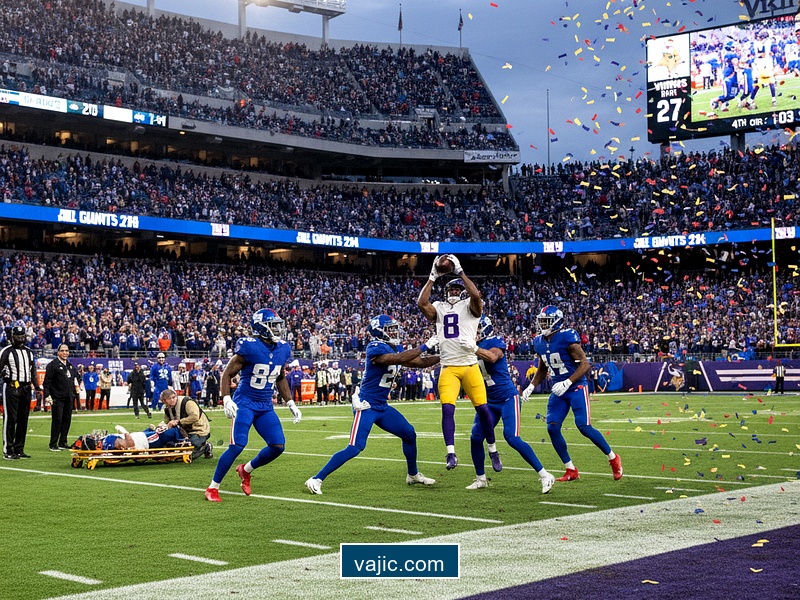
If you love the aesthetic beauty of the modern, air-raid NFL, Sunday’s 16-13 slog between the Minnesota Vikings and the New York Giants was likely an affront to your sensibilities. It was a game composed of bruises, missed assignments, and the kind of defensive trench warfare that usually results in widespread fan nausea. But if you have been covering this league as long as I have, you strip away the ugliness and look for the DNA markers of a contender.
What we saw in Week 16 wasn't just a "gritty" win, as the beat writers are calling it. It was a chaotic act of survival that channeled two very specific ghosts of the past: the defiant, defense-first Minnesota squad of 2015, and the tragic waste of elite pass-rushing talent reminiscent of the post-Super Bowl Giants era.
The scoreboard says Minnesota won. The film says both franchises are currently stuck in a time loop, trying to recreate identities that have long since evolved.
The Zimmer Echo: Defense Dragging the Offense
Let’s not mince words about the Vikings' offensive performance. It was disjointed. However, the narrative emerging from TCO Performance Center regarding "grit" is masking a more significant historical parallel. This Vikings team is beginning to look startlingly like the 2015 squad under Mike Zimmer—a team that finished 11-5 not because of offensive fireworks, but because they dragged opponents into the mud and drowned them there.
Ten years ago, that Vikings team allowed just 18.9 points per game. They didn't beat you; they survived you. Watching the current Vikings defense clamp down on the Giants in critical moments brought back memories of Everson Griffen and Linval Joseph bullying interiors.
The difference, and the concern, is the engine. In 2015, the Vikings had Adrian Peterson leading the league in rushing (1,485 yards) to control the clock. Today, Minnesota lacks that singular bell cow. They are relying on a defensive front to play perfect football because the offense lacks the "Williams Wall" safety net or the Peterson battering ram. Winning 16-13 against a reeling Giants team isn't a badge of honor; it's a terrifying blueprint for the playoffs where 16 points gets you sent home by San Francisco or Detroit.
Brian Burns and the Justin Tuck Paradox
From the New York perspective, the headline is the "Wet Willies"—a colloquialism for the offensive ineptitude that plagued them. But the real story, the one that should keep John Mara awake at night, is the performance of Brian Burns.
Burns was electric. He looked every bit the part of the legendary Giants pass rushers of the last two decades. There were snaps on Sunday where his get-off and bend were reminiscent of Osi Umenyiora in 2007 or Justin Tuck in 2011. He wrecked the Vikings' game plan single-handedly.
"An elite pass rush without a competent offense is the most expensive luxury item in sports. It’s a Ferrari engine inside a rusted-out sedan."
This is the tragedy of the modern Giants. In 2007 and 2011, the Giants' ferocious defensive line was complemented by an offense that, while inconsistent, possessed a "clutch gene" and a power run game (Brandon Jacobs, Ahmad Bradshaw). Those teams could capitalize on the short fields their defense created.
Sunday exposed the chasm between the Burns era and the Strahan/Tuck era. When Justin Tuck decimated Brady in Super Bowl XLII, Eli Manning was capable of driving the field. When Burns dominates today, he is rewarded with a three-and-out. The Giants are burning the prime years of an elite edge defender, a sin that football gods rarely forgive. We are witnessing the "Archie Manning Saints" dynamic playing out in East Rutherford: Hall of Fame talent suffocated by organizational incompetence.
The Injury Narrative vs. Roster Construction
The injury report is the favorite shield of the losing coach and the "gritty" winner alike. Both teams limped out of Week 16 battered. But let’s apply some scrutiny to the depth charts compared to 15 years ago.
In the mid-2000s, roster construction was about redundancy. The 2009 Vikings, who went to the NFC Championship, survived the loss of E.J. Henderson because they had veteran depth at linebacker. The current NFL salary cap structure, which encourages a "stars and scrubs" model, makes injuries fatal in a way they weren't previously.
The Giants' inability to function offensively when key pieces are banged up exposes a lack of developmental coaching. Conversely, Minnesota’s ability to plug gaps on defense suggests a system that elevates the replacement player—a hallmark of the great purple defenses of the late 60s and the Zimmer era. If Minnesota makes a run, it won’t be on talent alone; it will be on schematic protection of backup players, a lost art in the modern game.
A Warning in the Victory
The Vikings sit in a precarious position. History tells us that teams winning 16-13 in December are usually one-and-done in January. The 2000 Ravens are the exception, not the rule. To replicate the success of the 2009 team (which scored 29 points per game) or even the 1998 juggernaut, Minnesota must find a gear that was visibly absent against New York.
This wasn't a clinic; it was a street fight. And while street fights build character, they don't build dynasties. The Vikings proved they can take a punch, but against the NFC's elite, they will need to throw something heavier than the jab they displayed on Sunday. As for the Giants, they are merely ghosts of giants past—wearing the same blue, rushing the passer with the same ferocity, but lacking the heart and soul under center that once made them kings.