
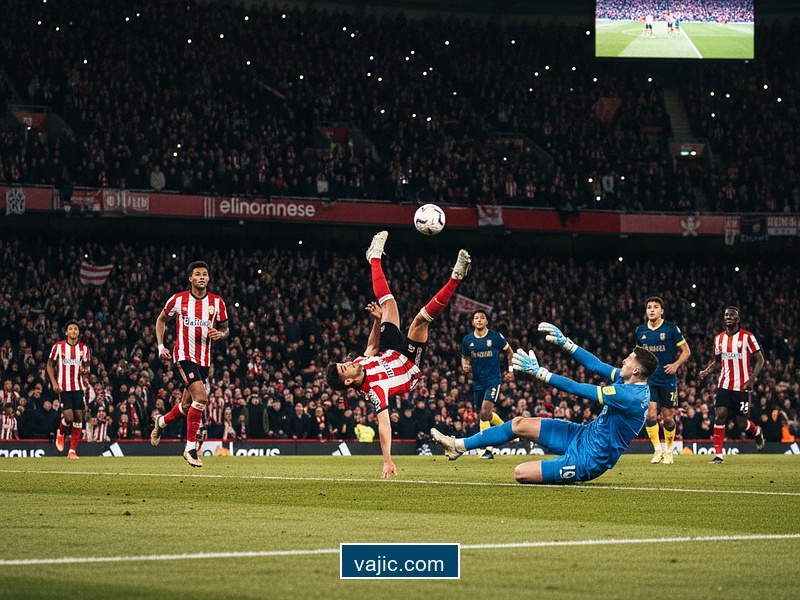
If you watch the tape closely enough, the corporate boardroom reveals the same tell-tale signs as a defensive line under pressure. As a scout, I don’t listen to the post-match interviews; I watch the hips, the recovery runs, and the non-verbal communication between the centre-backs. Right now, Warner Bros Discovery (WBD)—the parent company of TNT Sports—is moving like a veteran player carrying a knock, unsure if they can last the full ninety minutes of the next rights cycle.
The breaking news of a potential takeover battle or breakup at WBD isn't just Wall Street noise; it is a tactical crisis that threatens the structural integrity of the Premier League’s domestic broadcast revenue. We are witnessing a player whose conditioning is suspect trying to mark the fastest league in the world.
The Eye Test: Analyzing WBD’s Physicality
To understand the current takeover chaos, we must look at the biomechanics of the entity. WBD was formed through a merger that was supposed to create a physical beast capable of dominating the midfield. Instead, the "body composition" is wrong. They are carrying over $39 billion in gross debt. in coaching terms, they are playing heavy.
When you have that much leverage weighing you down, your pivot is slow. The "takeover battle"—essentially the market probing WBD for weakness, suggesting a split of its assets—is the equivalent of an opponent isolating a slow full-back. The Premier League rights auction is a high-line system; it requires financial agility and the ability to sprint into negative equity to secure market share. WBD’s current body language suggests they are gasping for air.
"You never sign a player who is looking at the bench every time he makes a mistake. Right now, WBD’s leadership is looking at the exit tunnel."
Historical Context: The Ghost of Setanta Past
We have seen this specific tactical failure before. The tape from 2009 doesn't lie. Setanta Sports tried to break the Sky Sports low-block. They overcommitted numbers forward, won two packages of rights, but lacked the defensive solidity (subscription base stability) to hold the lead. When the market turned, they collapsed on the pitch.
The Premier League is terrified of a recurrence. Richard Masters and the League executives are like pragmatic managers; they prefer the boring, reliable consistency of a Sky Sports (the Comcast-backed captain) over the mercurial flair of a distressed asset. In the last cycle, the League rolled over the rights at £4.8bn to avoid volatility during the pandemic. Now, they need an increase. They increased the inventory to 270 live games for the next cycle (2025-2029). They need a partner with lungs. If WBD is distracted by a hostile takeover or an internal breakup, they become a liability in possession.
The 'Unseen Work': Off-the-Ball Regrouping
A good scout looks at what a player does when the ball is on the other side of the pitch. While the headlines focus on the stock price, the unseen work here involves the technicalities of the Joint Venture with BT. TNT Sports is the rebadged BT Sport, a distinct entity within the WBD portfolio.
The danger here is a loss of tactical discipline. If WBD is carved up—separating the struggling linear networks (TNT, CNN) from the high-growth streaming/studio assets (Max, Warner Bros)—who owns the obligation to the Premier League? The League demands bank guarantees. They require a "clean sheet" regarding solvency.
If the linear assets are spun off into a "bad bank" structure, TNT Sports UK becomes an isolated winger with no support play. They might not have the capital from the parent company to bid aggressively for "Package A" or "Package B" (the prime Saturday slots). This forces them into a defensive crouch, perhaps only bidding to retain the early Saturday kick-off, or worse, conceding the position entirely to a fresh substitute.
The Opposition Scouting Report: DAZN and Amazon
If WBD is the aging star struggling for fitness, who is warming up on the touchline?
The High Press: DAZN
DAZN has been playing in the lower leagues and foreign markets (Serie A, Bundesliga), honing a high-intensity streaming model. They have been desperate to get on the Premier League pitch for years. They press high and aggressive. If they sense WBD’s takeover battle has weakened their resolve, DAZN will overload the channel. They have the technical ability (infrastructure) but have historically lacked the finishing product (profitability). However, against a crippled WBD, they might finally win the duel.
The Impact Sub: Amazon Prime
Amazon plays a specific role: the "False 9." They don't want to be the main striker; they want to drop deep, link play, and disrupt during key moments (Christmas fixtures). They are unlikely to bid for a 32-match weekly package because it ruins their efficiency stats. They want high impact, low volume.
Tactical Breakdown: The Unified Interface
The modern game is about transitions. The transition from Linear (Satellite/Cable) to Streaming is where this battle is won or lost. WBD’s strategy was to use premium sports (TNT) as the anchor for their 'Max' streaming service rollout in Europe. It’s the classic "Target Man" strategy: hit the big man (Live Sports) and play off him (sell HBO subscriptions).
If a takeover forces WBD to shed its linear assets, this tactical setup falls apart. The synergy creates the value. Without the cross-promotion of Premier League football driving traffic to House of the Dragon, the movement patterns become disjointed. The consumer—the crowd—senses this confusion. Churn rates (fans leaving the stadium early) will increase if the offering is fragmented across three or four different subscriptions.
Final Verdict: The Grade
Player: Warner Bros Discovery (TNT Sports)
Current Form: D-
Projection: Relegation Battle
The Premier League cannot afford a partner who is fighting for their life in the boardroom while trying to broadcast the world’s most expensive league. The 'takeover battle' signals distraction. In elite sports, a split-second of hesitation gets you punished.
Expect the Premier League to look at WBD’s body language during the tender process with extreme skepticism. Unless WBD can stabilize its hips and prove it has the stamina (capital) to run the full length of the 4-year contract, we might see a substitution. The sentimental attachment to the BT Sport lineage is gone. The League will ruthlessly exploit this weakness to bring in a partner—likely a tech giant or a recapitalized DAZN—who can actually keep up with the pace of play.