
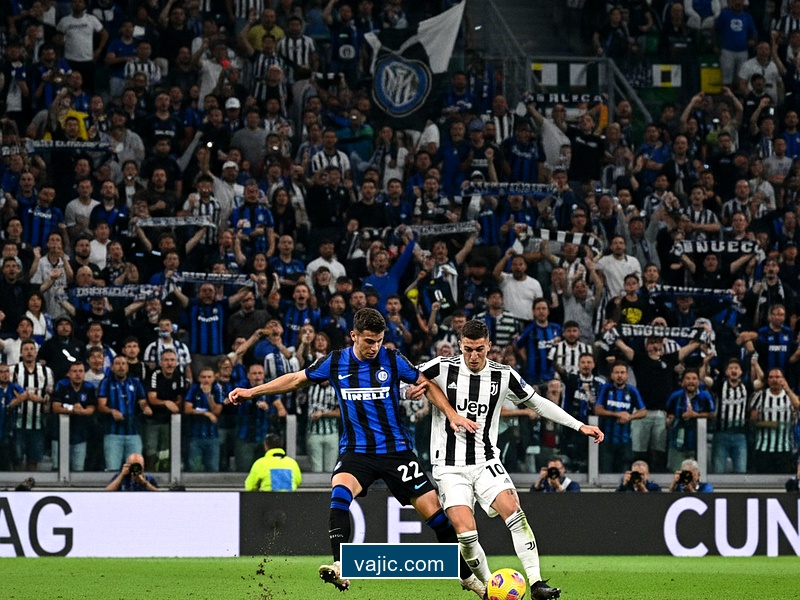
There is a specific kind of trauma encoded in the DNA of every Inter Milan supporter, a dormant gene that awakens whenever the transfer window opens. It is not the fear of losing a star player—that is simply the reality of modern Calcio. It is the fear of strengthening the enemy while weakening oneself, a blunder the Nerazzurri perfected in the early 2000s.
The latest reports suggesting Inter are preparing to sacrifice Davide Frattesi to balance the books, with Juventus lurking as the primary suitor, does not just smell of financial desperation. It reeks of the calamitous Fabian Carini-Fabio Cannavaro exchange of 2002. If Beppe Marotta sanctions this move, he isn't just balancing a spreadsheet; he is handing Thiago Motta the engine required to dethrone Inter.
The Curse of the Misunderstood Midfielder
To understand the Frattesi dilemma, we must first look backward. In the early 2000s, Inter possessed midfielders of supreme quality whom they simply did not know how to utilize. They viewed Clarence Seedorf as tactical excess and Andrea Pirlo as a luxury they couldn't afford to nurture. Both were shipped to AC Milan. The rest is a painful history of Champions League trophies lifting in red and black stripes.
Davide Frattesi is currently suffering from a similar, albeit tactical, prejudice. Simone Inzaghi views him primarily as an "impact sub"—a chaotic element to throw on when defenses are tired. While Henrikh Mkhitaryan offers the rhythmic control of a metronome, Frattesi is heavy metal drumming. He is a pure incursore (raider), a box-to-box agent of chaos who operates in the half-spaces.
His numbers per 90 minutes are startling. Last season, despite limited starts, his goal conversion rate from midfield rivaled strikers. He attacks the six-yard box with the ferocity of a young Antonio Conte or, to use a more sacred comparison, Dejan Stankovic during Mancini’s first tenure. To sell a player who creates verticality in a league obsessed with horizontal possession is malpractice. To sell him to Juventus is suicide.
Tactical Analysis: The Missing Piece for Thiago Motta
Why does Cristiano Giuntoli want him at Juventus? The answer lies in the deficiencies of the current Bianconeri setup. Thiago Motta’s system relies on fluid rotation, but his current midfield—dominated by the likes of Manuel Locatelli and Khephren Thuram—lacks a natural goal threat arriving late into the box.
Teun Koopmeiners was purchased to fill that void, but the Dutchman operates best as an advanced playmaker or a second striker. He needs runners to distract defenders. Frattesi is the ultimate runner. Pairing Frattesi with Koopmeiners would recreate the dynamic Juventus enjoyed a decade ago with Arturo Vidal and Claudio Marchisio. Vidal was the lung-busting aggressor; Marchisio was the tactical intelligence. Frattesi is the modern Vidal.
"Giving Juventus the one profile of player they desperately lack is not a market strategy; it is a resignation letter from the title race."
The Newcastle Mirage and Premier League Doubt
The rumors mention Newcastle United’s hesitation, and this offers a moment of clarity regarding Frattesi’s profile. The Premier League doubts stem from a technical skepticism. English scouts often view Italian mezzalas through the lens of Sandro Tonali’s difficult adaptation period. They question: does Frattesi have the close control to handle the high press of the Premier League?
This hesitation is ironic because Frattesi’s game is arguably better suited to the Premier League’s transition speed than Serie A’s tactical rigidness. However, Newcastle’s PSR (Profit and Sustainability Rules) concerns create a convenient smokescreen. The reality is that Italian midfielders rarely command their true market value abroad unless they are technically transcendent like Jorginho or Verratti. This lack of a foreign auction forces Inter back into the arms of domestic rivals, depressing the price and increasing the risk of strengthening a competitor.
Historical Comparison: The "Super-Sub" Fallacy
Inzaghi’s reluctance to start Frattesi echoes the treatment of Julio Cruz in the mid-2000s. Cruz was the "Gardener," the man who came off the bench to score vital goals, yet was rarely trusted to lead the line in a Champions League final. But Cruz was a striker; you can rotate strikers. Midfielders require rhythm.
Let’s look at the stats of Frattesi compared to a legend who eventually forced his way into the starting XI: Dejan Stankovic (2009-10 Treble Season context).
| Attribute | Davide Frattesi (Current Est.) | Dejan Stankovic (2006-2010 Era) |
|---|---|---|
| Role | Vertical Mezzala / Box crasher | Dynamic Destroyer / Long-range threat |
| Tactical Usage | Bench impact (60-70% sub appearances) | Starter (Utility across diamond) |
| Biggest Asset | Off-ball movement in the box | Ball striking & Aggression |
| Defensive Output | Moderate | Elite |
The difference is that Jose Mourinho found a way to play Stankovic, Sneijder, Cambiasso, and Zanetti simultaneously. Inzaghi, conversely, is wedded to his 3-5-2 with Mkhitaryan as the immovable object. This rigidity is what drives players like Frattesi toward the exit. If he cannot displace a 35-year-old Armenian international now, when will he?
The Oaktree Factor: Liquidity over Legacy
We cannot ignore the elephant in the boardroom: Oaktree Capital Management. The American ownership model prioritizes asset value protection and liquidity. Frattesi represents one of the few "liquid" assets on the books—young, Italian international, high resale value. Mkhitaryan and Acerbi have zero resale value. Barella and Lautaro are unsellable totems.
This economic reality forces Inter into a corner. They need to generate cash to function, and Frattesi is the easiest lever to pull. However, selling to Juventus suggests a profound misunderstanding of the European football landscape. In the NFL or NBA, trading with a rival is standard business because the draft system equalizes talent over time. In European football, dynasties are built on hoarding talent and starving your rivals.
A Dangerous Precedent
If Frattesi moves to Turin, he will undoubtedly succeed. He fits Thiago Motta’s heavy-pressing, vertical football far better than Inzaghi’s patient possession game. He will score 8-10 goals a season, likely including one in the Derby d'Italia, celebrating with that vein-popping intensity that currently endears him to the Curva Nord.
Inter stands at a precipice. They have been the dominant force in Italy for three years, largely due to Juventus’s self-implosion and Milan’s inconsistency. That grace period is ending. Juventus is rebuilding competently for the first time since the Marotta exit. By handing them Frattesi, Inter wouldn't just be selling a player; they would be validating Juventus's resurgence.
History serves as a brutal teacher. The ghosts of Pirlo, Seedorf, and Cannavaro still wander the corridors of Appiano Gentile. Adding Davide Frattesi to that list of regrets, simply to balance a quarterly financial report, would be an unforgivable betrayal of sporting ambition. Keep the player. Rotate the squad. Or sell him abroad for less money. But under no circumstances should the black and blue allow him to wear black and white.