
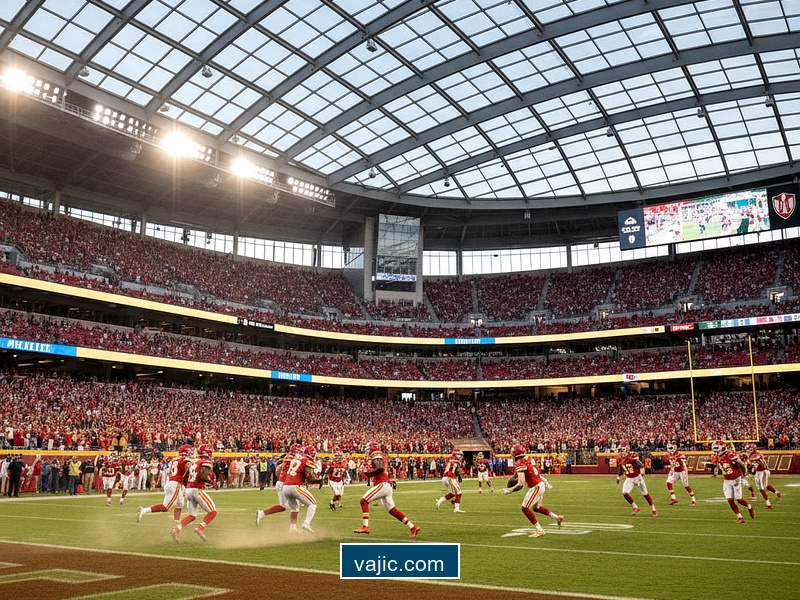
The geography of the National Football League changed irrevocably this week, not just on a map, but in its spiritual architecture. The Kansas City Chiefs are leaving Missouri. After the failure of the Jackson County sales tax vote in April, the franchise has embraced the outstretched, cash-filled arms of Kansas legislators, announcing a migration to Wyandotte County. The price tag is $3.3 billion. The centerpiece is a domed stadium. And the cost, hidden beneath the shimmer of architectural renderings and STAR bond financing, is the identity of the most intimidating home-field advantage in North American sports.
We are witnessing the final sterilization of the NFL experience. The Hunt family, currently helmed by Clark Hunt, is trading the visceral, frozen breath of a January playoff game for the climate-controlled certainty of corporate luxury. They are trading the mud and the noise for a roof. In doing so, they are fundamentally altering the tactical DNA of a franchise that was forged in the elements.
The Death of the Weather Game
For decades, "Arrowhead Weather" was the 12th, 13th, and 14th man on the roster. Opposing quarterbacks didn't just have to decipher Steve Spagnuolo’s blitz packages; they had to grip a rock-hard football in sub-zero wind chills while 76,000 maniacs screamed at 142.2 decibels. That acoustic violence, magnified by the specific geometry of the Truman Sports Complex concrete bowl, is scientifically difficult to replicate in a modern dome, which often prioritizes acoustics for Taylor Swift concerts over crowd-generated distortion.
Consider the tactical shift this represents. We are moving from the gritty "Martyball" ethos of the 1990s to the antiseptic perfection of the Indianapolis Colts circa 2005. When Peyton Manning played in the RCA Dome, the Colts were built for speed and silence. They were a track team. But when they had to go to Foxborough to face Tom Brady in the sleet, they wilted. The Chiefs are currently the Patriots of this era—a team that thrives in chaos. By moving to a dome, they are voluntarily becoming the Colts.
"You take the elements out of the game, you take the toughness out of the team. A dome softens you. It makes you comfortable. Football is not meant to be played in 72-degree air conditioning while it’s snowing outside." — General sentiment of the AFC West old guard.
Patrick Mahomes, arguably the greatest talent to ever play the position, will likely flourish statistically in a dome. His numbers will inflate. But the fear factor diminishes. The crushing inevitability of losing to Kansas City in the cold is gone. The Chiefs are trading a gladiatorial arena for a convention center.
The 2003 Ghost vs. The 2025 Reality
To understand the gravity of this shift, we must look back twenty years. The 2003 Chiefs, led by Dick Vermeil, possessed an offense that rivaled the modern Mahomes era in efficiency, if not championships. That offensive line—Willie Roaf, Will Shields, Brian Waters—is enshrined in Canton. Priest Holmes set the single-season rushing touchdown record (27) that year.
That 2003 team went 13-3 largely because Arrowhead was a fortress. They were built to run the ball down your throat while the defense fed off the crowd’s hysteria. However, that era’s failure was defensive (the infamous "no-punt game" against the Colts). The lesson Clark Hunt seemingly took from the Vermeil and subsequent eras wasn't about defensive personnel; it was about revenue streams.
The 2003 Chiefs operated in an NFL where ticket sales were king. The 2025 Chiefs operate in an NFL where real estate development is king. The proposed development in Wyandotte County isn't just a stadium; it’s a "training facility and village." It’s an attempt to replicate The Star in Frisco, Texas, or Patriot Place in Foxborough. It is the gentrification of fandom.
The Economics of STAR Bonds: A Public Gamble
The financing mechanism driving this move requires scrutiny that goes beyond the headlines. Kansas is deploying STAR (Sales Tax and Revenue) bonds. Unlike traditional municipal bonds, STAR bonds allow municipalities to issue debt to pay for construction, which is then paid back by all the future sales tax revenue generated within that specific district. It is a tool unique to Kansas statute, originally designed for tourism attractions like the Kansas Speedway.
This is aggressive state-sponsored capitalism. By drawing the Chiefs across the state line, Kansas is betting that the district will generate billions in commerce—hotels, restaurants, retail. However, history suggests these projects often cannibalize spending from neighboring areas rather than creating net new economic activity. They are essentially siphoning money from Jackson County, Missouri, to Wyandotte County, Kansas.
Missouri had its chance. The refusal of Jackson County voters to extend the 3/8-cent sales tax was a populist revolt against billionaire subsidies. But in the ruthless economy of the NFL, principles don't build dynasties. Leverage does. Clark Hunt played Missouri against Kansas, and Kansas blinked first with a checkbook in hand.
Erasing the Lamar Hunt Legacy?
Lamar Hunt, the franchise founder, was a revolutionary who valued the purity of the AFL. He coined the term "Super Bowl." He was an innovator, but he was also a traditionalist regarding the fan experience. The move to the Truman Sports Complex in 1972 was radical because it created football-specific sightlines, rejecting the multi-purpose "cookie-cutter" stadiums of the era (like Three Rivers or Riverfront).
Clark Hunt is now rejecting his father’s architectural philosophy. By moving to a dome, the Chiefs are joining the homogeneity of the modern NFL. Every new stadium—from Las Vegas to Minneapolis to the proposed Nashville project—feels eerily similar. They are glass cathedrals designed for Super Bowls and Final Fours, not for the granular, dirty business of AFC West divisional games.
The Verdict
The Chiefs will likely increase their valuation by $1 billion the moment shovels hit the dirt in Kansas. Patrick Mahomes will play the twilight of his prime in perfect lighting, free from wind gusts and muddy turf. The luxury suites will be opulent, and the Wi-Fi will be lightning fast.
But on a gray Sunday in December, when the snow is falling sideways and the opposing team is shivering on the sidelines, we will look at that pristine, hermetically sealed dome in Wyandotte County and realize what we lost. We traded the most authentic atmosphere in sports for a shopping mall with a football field in the middle.