
The modern football news cycle is a dopamine dispenser, spitting out transfer rumors like cheap candy. The latest ticker tape suggests AC Milan has secured a Premier League reinforcement amidst the noise of a Santiago Gimenez injury saga. For the casual observer, it’s just another transaction. For those of us who have spent two decades analyzing the tactical heartbeat of the Rossoneri, it signals a desperate, necessary pivot.
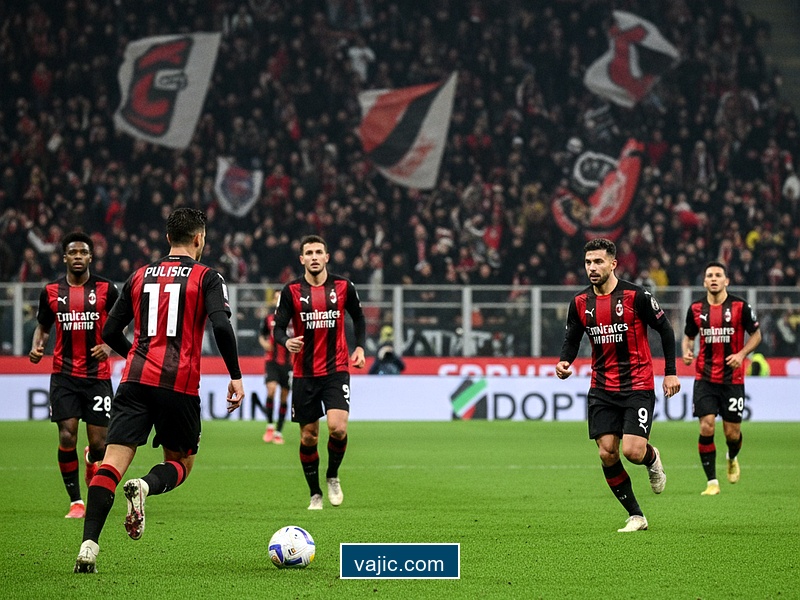
Christian Pulisic is arguably playing the finest football of his career in Lombardy. He has shed the "Captain America" marketing skin and replaced it with the ruthless efficiency of a Serie A veteran. Yet, individual brilliance in Italy is a fragile currency if the vault isn't locked. The arrival of Premier League steel—presumed to be a defensive or midfield reinforcement from the English top flight—isn't just a squad boost. It is an admission that Milan cannot win with artistry alone.
The Ghost of the Christmas Tree
To understand why this specific type of reinforcement matters for Pulisic, we must look backward. The lens of history is often rose-tinted, but the tactical blueprints of the mid-2000s Milan under Carlo Ancelotti remain the gold standard for balancing flair with ferocity.
In the 2006-07 season, the year Milan exacted revenge on Liverpool in Athens, the narrative focused on Kaká. The Brazilian was ethereal, a trequartista operating on a higher plane of existence. Pulisic, in his current iteration, occupies a similar space of offensive responsibility—the primary spark plug when the system stalls.
However, Kaká did not win the Champions League alone. He was liberated by the most functional midfield in modern history. He had Gennaro Gattuso snarling at ankles, Massimo Ambrosini winning aerial duels, and Clarence Seedorf acting as the tactical metronome. They were the water carriers who allowed the artist to paint.
"Talent without protection is a luxury. In Serie A, luxury gets you fourth place. Structure gets you the Scudetto."
Current Milan has often left Pulisic and Rafael Leão isolated. When the full-backs bomb forward and the midfield pivot gets overrun, Pulisic is forced to track back 60 yards, diluting his explosive power in the final third. Bringing in a Premier League profile—synonymous with physical intensity and transition defense—is an attempt to recreate the "Gattuso Effect." It allows Pulisic to cheat five yards higher up the pitch, where he is lethal, rather than wasting energy covering defensive lapses.
The Premier League Tax: Why Physicality Matters in Calcio
There is a prevailing myth that Serie A is slow. It isn't slow; it is cerebral. However, the modern game has been homogenized by the high press, a tactic perfected in Germany and England. Milan’s recent struggles, particularly in the derby humiliations against Inter, stemmed from a lack of physical durability in the middle of the park.
The signing of a Premier League asset is a direct response to the physicality of Inter’s midfield trio (Barella, Calhanoglu, Mkhitaryan). Historically, Milan has thrived when importing "northern" grit. Think of Jaap Stam in 2004—a defender who didn't just stop attackers but terrified them. Or go back further to Marcel Desailly, whose transition from defense to midfield provided the platform for the 1994 demolition of Barcelona.
Pulisic is a rhythm player. He thrives on quick touches and acceleration. If Milan’s midfield is porous, the ball doesn't reach him in rhythm; it reaches him in desperation. A sturdy recruit from England stabilizes the transition phase. If this signing can secure the right channel or the defensive pivot, Pulisic stops receiving the ball with his back to goal on the halfway line and starts receiving it on the half-turn at the edge of the box. That is a massive distinction in Expected Goals (xG) generation.
The Gimenez Variable and the Burden of Goals
The backdrop of this transfer news involves the injury to Santiago Gimenez, a player long rumored to be the answer to Milan’s post-Giroud identity crisis. The failure to secure a marquee striker, or the injury removing them from the board, shifts the tectonic plates of the squad.
Without a traditional "Capocannoniere" contender like Andriy Shevchenko (who netted 24 league goals in 2003-04) or a prime Zlatan Ibrahimović, the goal-scoring burden decentralizes. It falls squarely on the wingers.
This is where the squad boost becomes critical. If Pulisic is now expected to contribute 15+ goals rather than just assists, he cannot be part of the defensive block. In the 2010-11 title-winning season, Massimiliano Allegri utilized Robinho and Pato in wide areas, but he backed them with the industrial strength of Mark van Bommel and Kevin-Prince Boateng. The forwards were absolved of dirty work because the engine room was filled with brawlers.
| Era | Star Creator | The "Enforcer" Behind Him | Outcome |
|---|---|---|---|
| 2003-04 | Shevchenko/Kaká | Gattuso/Ambrosini | Scudetto Winners |
| 2010-11 | Ibrahimović/Robinho | Van Bommel/Gattuso | Scudetto Winners |
| 2021-22 | Leão/Giroud | Kessie/Tonali | Scudetto Winners |
| 2024-25 | Pulisic | [New EPL Signing] | TBD |
The American Evolution: From Winger to 'Regista' of the Attack
We need to re-evaluate what Pulisic is becoming in Italy. He is no longer just a pace merchant. His heat maps from the current season show a player drifting centrally, operating almost as a second 10. This mimics the evolution of Clarence Seedorf, who started his career wide and moved inward as his football IQ outpaced his raw speed.
By securing a Premier League signing who can handle the chaotic transitions typical of English football, Milan is effectively buying Pulisic time and space. In tactical theory, this is the concept of "rest defense." If the new arrival provides security against the counter-attack, Pulisic can take high-risk, high-reward positions without fear that a turnover will result in a goal conceded.
Look at Napoli’s title run two years ago. Khvicha Kvaratskhelia dazzled, but he was supported by Stanislav Lobotka and André-Frank Zambo Anguissa cleaning up every spill. Milan has lacked that broom. Reijnders is elegant, and Loftus-Cheek is powerful, but they lack the pure defensive cynicism of a true destroyer or a lockdown fullback.
The Verdict
The "Gimenez injury" headline might suggest Milan missed out on a Plan A, but in a strange twist of fate, fortifying the spine might be more beneficial than buying another shiny hood ornament. Goals win games, but defense wins championships—an old cliché that remains stubbornly true in Serie A.
Christian Pulisic doesn't need another striker to combine with as much as he needs a team that doesn't collapse when possession is lost. If this Premier League import brings even half the grit of a Gattuso or the stability of a Marcel Desailly, Pulisic’s output won't just be good; it will be historic. Milan is finally building the pedestal; now let's see if the statue can stand tall.