
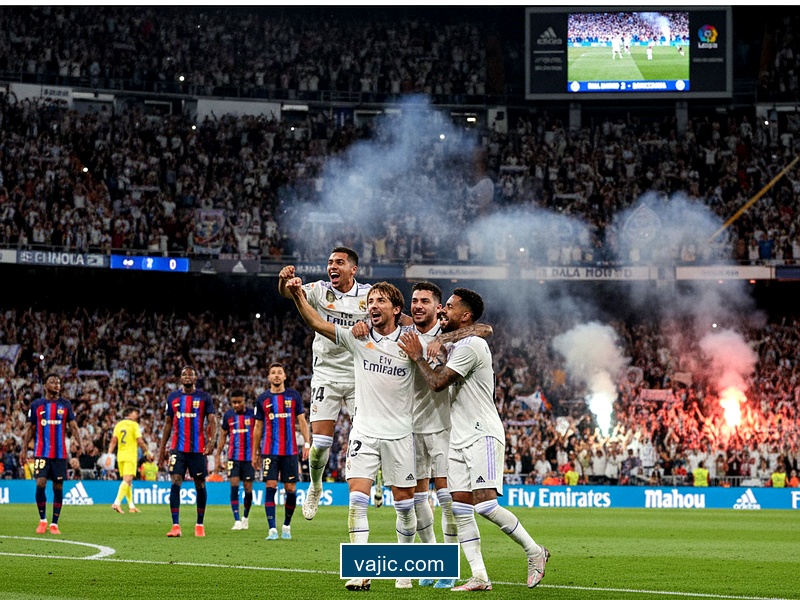
If you watch football long enough, you stop looking at the ball. The ball is a liar. It tells you where the play is, not where the play is going. Instead, you watch the hips of the holding midfielder, the scanning frequency of the number ten, and the unseen work of the weak-side winger. Today, the "ball" is the headline figure: Real Madrid earning €157.5 million from La Liga television rights for the 2024/25 season. It is the highest figure in Spain.
But as a scout analyzing the mechanics of a European giant, I’m not interested in the tap-in. I’m interested in the build-up play that makes the goal inevitable. This revenue figure isn't just a deposit; it is a tactical blueprint of hegemony. It reveals a club that has mastered the "dark arts" of economic dominance, creating a separation from the pack that looks less like a sporting rivalry and more like a varsity team scrimmaging against middle schoolers.
The Biomechanics of the Deal
To understand why this €157.5m figure is a masterclass in positioning, we must dissect the movement patterns of La Liga’s revenue distribution model. Unlike the Premier League, which operates with a socialist "high line" (where the bottom club earns nearly 70-80% of the top club’s revenue), La Liga plays a distinctively hierarchical system. It is a tactical setup designed to feed the strikers.
The distribution creates three distinct zones of play:
- Zone 1 (50%): An equal share distributed to all clubs. This is the baseline fitness.
- Zone 2 (25%): Based on sporting results over the last five seasons. This is weighted heavily toward recent form, playing into Madrid's consistency.
- Zone 3 (25%): "Implantación Social" (Social Implementation). This is where Madrid wins the physical duel.
The "Social Implementation" metric is the equivalent of off-the-ball movement. It is calculated through ticket sales, audiovisual audiences, and the nebulous value of the club's brand contribution to the league. Real Madrid generates over 35% of all international viewership for La Liga. When you control the eyes, you control the purse.
"Madrid doesn't just play the match; they own the broadcast frequency. Their movement off the pitch dictates the revenue flow for the entire ecosystem."
Tactical Analysis: The CVC Opt-Out
The most impressive piece of technical skill here isn't the €157.5m itself; it’s the defensive discipline regarding the CVC deal. When La Liga signed the "La Liga Impulso" deal with CVC Capital Partners, selling 8.2% of commercial rights for 50 years in exchange for immediate cash, the vast majority of Spanish clubs took the money to plug holes in their leaking defenses.
Real Madrid, along with Barcelona and Athletic Club, refused. They held their shape. They maintained a rigid defensive structure against private equity dilution. By opting out, Madrid retained 100% of their audiovisual rights. That €157.5m is pure, undiluted revenue. Their competitors, who took the CVC injection, are now playing with a permanent handicap, ceding a percentage of their TV income for the next half-century. Madrid is sprinting on fresh legs while the rest of the league is dragging a weighted sled.
Projected Revenue Table: The Gap in Class
We need to visualize the spacing on the pitch. In scouting terms, Madrid has created massive "verticality" between themselves and the mid-table.
| Club Rank | Est. Revenue (24/25) | Tactical Context |
|---|---|---|
| 1. Real Madrid | €157.5m | Elite Exploitation of Market Share |
| 2. FC Barcelona | ~€150.0m | Recovering from financial injury; high debt load mitigates income efficiency. |
| 3. Atletico Madrid | ~€115.0m | Playing a solid low block, but lacks the global "social" metric to push higher. |
| 20. Bottom Club | ~€48.0m | Relegation fodder. The financial gap forces them to play defensively in the market. |
Scouting the "Unseen" Work: The Bernabéu Engine
A scout looks for a player's engine—their aerobic capacity. Florentino Pérez has installed a nuclear reactor in the form of the renovated Santiago Bernabéu. While the TV rights figure is the headline, the stadium is the pivot player that facilitates possession.
The TV money is now merely the base salary. The underground greenhouse pitch, the retractable roof, and the ability to host NFL games and Taylor Swift concerts turn the stadium into a 365-day cash generator. This allows Madrid to decouple their financial health from sporting variance. If they finish second in the league, the stadium revenue (projected to hit €400m annually) covers the defensive lapses. They have "insured" their tactical risks with concrete and steel.
The Transfer Market Transition Phase
How does this €157.5m translate to the grass? It allows Madrid to execute the most dangerous maneuver in modern football: the generational transition without a drop in performance.
Most clubs, when replacing legends like Kroos, Modric, or Benzema, suffer a dip in form (and consequently, revenue). Madrid used their financial verticality to sign Jude Bellingham, Kylian Mbappé, and Endrick in rapid succession. They are overloading the zone. The TV revenue covers the amortization costs of these Galácticos, ensuring that the "Social Implementation" metric remains high because the stars are always on stage.
Watch Mbappé’s arrival. It wasn't just a sporting transfer; it was a leverage play against La Liga. Tebas needs Mbappé to sell international rights. Madrid knows this. They hold the league hostage with their own star power, forcing favorable broadcasting schedules and kick-off times that suit their global audience rather than the local fan in Vallecas.
Comparative Scouting: The Premier League Threat
Despite this domestic dominance, the scouting report reveals a vulnerability when we zoom out to the European competition. The bottom club in the Premier League earns nearly as much from TV rights as Real Madrid does from La Liga. Southampton or Leicester City can outbid Spanish Champions League contenders for mid-tier talent.
This explains Madrid’s body language regarding the Super League. Their aggressive posturing isn't about greed; it's about survival mechanics. They recognize that relying solely on domestic TV rights, even at €157.5m, is a losing strategy long-term against the state-backed clubs and the Premier League collective. Madrid is playing a high line, trying to force an offside trap on UEFA. They view the current La Liga model as a training ground, not the main event.
The Verdict: A Grade 'A' Asset
When you strip away the noise, the €157.5m figure tells a story of a club that has perfected the art of "managing the game." They slow it down when necessary (super league court cases) and speed it up when an opportunity arises (signing Mbappé on a free). They dominate the half-spaces of corporate law and broadcasting negotiations as effectively as they control the midfield.
The rest of La Liga is playing checkers while Florentino is playing 4D chess. The gap is widening. We are witnessing a league that is becoming less of a competition and more of a feeder system for the predator at the top of the food chain. Madrid’s movement is efficient, ruthless, and terrifyingly sustainable.