
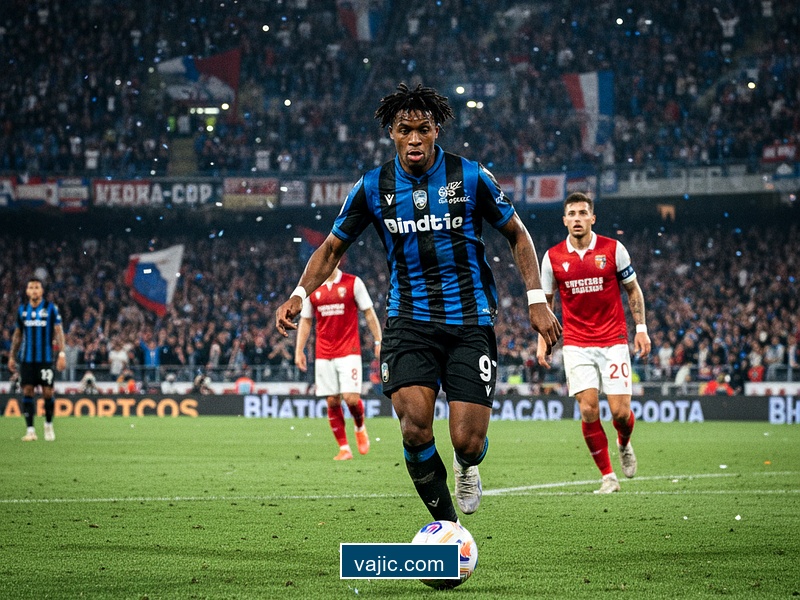
The lights hit you first. Blinding. White-hot. Then comes the sound. A wall of noise that hits your chest like a physical blow. You are in the Champions League arena. The air smells of flares, freshly cut grass, and nervous sweat. Tonight, the opposition speaks Italian. And for a striker like Loïs Openda, that means one thing: pain. Not just physical pain, though the bruises will bloom by morning. It is mental agony. It is a chess match played at 100 miles per hour where every move you make is predicted, stifled, and crushed.
We stand in the stands, hearts hammering against our ribs. We scream for the pass. We scream for the run. But down there, on the green stage, the space is shrinking. The defenders from Serie A do not just tackle; they suffocate. They close the gaps before you even see them. Openda, usually a blur of motion and lethal intent, found himself running into brick walls. And now, in the cold light of the post-match analysis, he isn't making excuses. He is baring his soul. He admits it. The Italian job was a nightmare.
The Italian Straitjacket
You can feel the frustration radiating off the pitch. It travels up into the ultras section. We stomp our feet. We demand blood and goals. But Openda knows the truth. In the Bundesliga, space is a commodity often freely traded. You run, they run, the game opens up like a flower. Against an Italian side? Forget it. The door is bolted shut. The windows are boarded up.
When Openda speaks, the words carry the weight of 90 minutes of struggle. He talks about "bad games." It’s a rare admission in modern football, where egos usually shield players from reality. But we saw it. We saw the checked runs. We saw the hands thrown up in exasperation. Every time he tried to turn, a defender was there, breathing down his neck, stepping on his heels, whispering doubts into his ear.
"Serie A is not easy, I know I had some bad games."
That sentence lands harder than a tackle. It resonates with us in the stands because it validates what we saw. We aren't blind. We know when our heroes are struggling. But hearing them own it? That changes the dynamic. It transforms anger into empathy. We realize that the gladiator in the arena is fighting a beast that refuses to bleed. Serie A defenses are built on centuries of tactical discipline. They don't play for fun. They play to destroy your spirit.
The Deafening Silence of the Box
Imagine the scene. The winger breaks free. The cross comes in. The crowd rises as one organism, a collective intake of breath that sucks the air out of the stadium. Openda makes his move. But he is blocked. Shouldered out. The ball sails harmlessly away. The silence that follows is deafening. It is the sound of hope hitting the ground.
This is the reality Openda describes. He is a striker who thrives on chaos, on the lightning-fast transition. But against the tactical masters of Italy, chaos is outlawed. Order reigns supreme. It forces a striker to question his instincts. Do I run left? No, the center-back is waiting. Do I drop deep? No, the defensive midfielder has cut the passing lane. You freeze. And in football, if you freeze, you die.
| League Style | Striker's Reality | Fan Experience |
|---|---|---|
| Bundesliga | High lines, endless space, pure speed. | Constant cheering, goal fests, open play. |
| Serie A (UCL) | Low blocks, physical marking, isolation. | Nail-biting tension, tactical deadlock. |
The table tells the story, but the emotion paints the picture. Openda's admission isn't defeatism; it's a recognition of the battlefield. He knows he had bad games because the opponent forced him into them. They stripped away his weapons one by one until he was left naked in the spotlight.
Resilience in the Face of the Wall
But here is the twist. The beautiful, agonizing twist. We love him more for saying it. The modern fan is tired of PR-polished robots. We want humans. We want to know that when the final whistle blew, Openda felt the same crushing disappointment that we did in the concourse. His confession binds us together.
He acknowledges the difficulty not to surrender, but to adapt. "Serie A is not easy." No, it is hell for a striker. But surviving hell is what makes a legend. The Champions League does not forgive weakness. It demands that you take your "bad games," swallow the bitter pill, and come back sharper.
The drums in the Curva are starting up again. The memory of the missed chances is fading, replaced by the anticipation of the next match. Openda has faced the monster. He has looked into the eyes of the Italian defense and blinked. But he is still standing. He is still running.
This is why we travel across borders. This is why we lose our voices. Because football is not just about the goals you score. It is about the struggles you endure. Openda’s honesty is a rallying cry. He has been knocked down by the tacticians. Now, we wait for him to stand up and break the wall. The stadium holds its breath. The next chance is coming. And this time, he knows exactly what he is up against.