
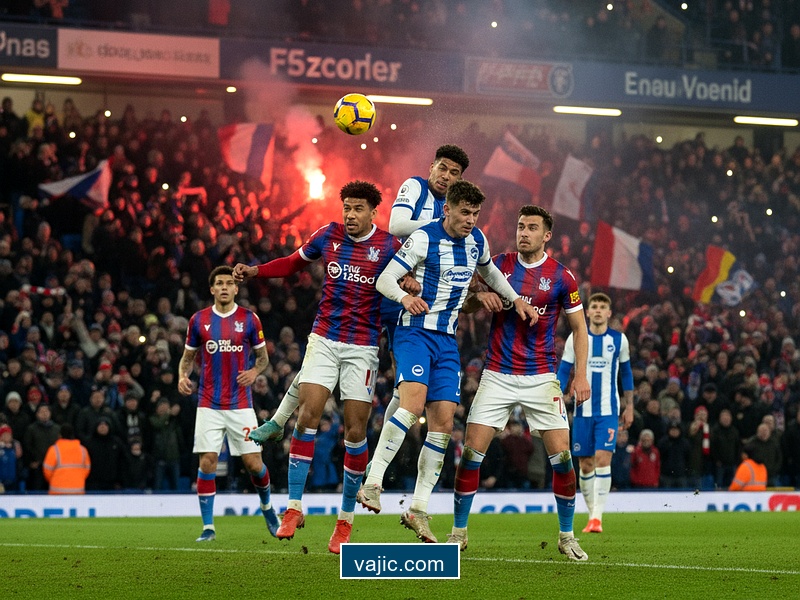
Oliver Glasner and Fabian Hürzeler engaged in a masterclass of mutual nullification, where systemic discipline superseded individual brilliance. The goalless draw at Selhurst Park was not a failure of intent, but a triumph of defensive geometry and compression. This was a fixture decided by the denial of space rather than the creation of chances.
| Metric | Crystal Palace | Brighton & Hove Albion |
|---|---|---|
| Expected Goals (xG) | 0.68 | 0.72 |
| PPDA (Press Intensity) | 8.4 | 9.1 |
| Midfield Turnovers | 14 | 16 |
| Zone 14 Entries | 3 | 4 |
Why The Numbers Matter
The statistics above paint a vivid picture of a tactical stalemate. An xG total of less than 1.5 combined suggests that neither side successfully penetrated the opponent's low block or disrupted their rest defense. The critical metric here is the Passes Per Defensive Action (PPDA). Both sides operated with a PPDA below 10, indicating an aggressive high press. When two teams press this effectively without a requisite passing outlet, the game devolves into a series of turnovers in the middle third. The scarcity of Zone 14 entries (the crucial area just outside the penalty box) confirms that both Glasner and Hürzeler prioritized the protection of the central corridor, forcing play into harmless wide areas.
The Compression of the Midfield Block
Oliver Glasner’s system relies heavily on a 3-4-2-1 formation that transforms into a compact 5-2-3 out of possession. Against Brighton, this structure proved impenetrable but also self-limiting. The "blood and thunder" description of the match is a euphemism for the physical collisions resulting from compressed space. Palace’s double pivot sat deep, refusing to be baited by Brighton’s center-backs.
Hürzeler’s Brighton typically thrives on artificial transitions—passing slowly at the back to draw the opponent out, then exploiting the space left behind. Palace, however, refused to break their shape. By maintaining a disciplined mid-block rather than chasing the ball into the goalkeeper’s feet, Palace neutralized Brighton’s primary method of ball progression. This tactical standoff resulted in the ball circulating harmlessly among the defenders, with vertical passing lanes strictly marshaled by Palace’s screening midfielders.
Georginio Rutter and the Search for Artificial Advantages
The defining moment of the match—Georginio Rutter’s booking for simulation after a penalty award was overturned—must be analyzed through a tactical lens rather than a moral one. In a match where structural rigidity strangles creativity, attackers often seek "artificial" means to break the deadlock.
Rutter found himself isolated against a three-man central defense. Heat maps from the fixture show Rutter’s touches were sporadic and pushed toward the periphery. The incident occurred during a rare transitional moment where the defensive lines were momentarily disjointed. Rutter’s decision to anticipate contact was a reaction to the lack of viable passing options. The overturned penalty signifies the efficiency of VAR in correcting real-time errors, but structurally, it highlights how desperate the attacking units became. They could not beat the block with passing, so they attempted to beat it with kinetics.
"In systems of total negation, the mistake becomes the playmaker. Both teams waited for an error that never truly arrived."
The Failure of the Wide Overloads
Modern Premier League tactics often utilize wing-backs to create numerical superiority (overloads) on the flanks. In this fixture, the wide areas became graveyards for possession. Crystal Palace’s wing-backs were pinned back by Brighton’s high wingers, forcing a flat back five. This defensive security came at the cost of offensive transition.
Conversely, Brighton’s attempts to double up on the wings were met with aggressive shifting from the Palace midfield. The lateral distance between the Palace center-backs and wing-backs was minimal, closing the channels usually exploited by underlapping runs. The data shows an unusually high number of throw-ins in the final third, a clear indicator that attacks were being ushered to the touchline and smothered. The inability of either team to execute a switch of play quickly enough allowed the defensive blocks to slide across and reset, rendering cross-field balls ineffective.
Rest Defense and Transition Control
Perhaps the most impressive aspect of this 0-0 "model" was the "Rest Defense" displayed by both units. Rest defense refers to the structure a team maintains while they are in possession, specifically preparing for the moment they lose the ball.
Every time Palace looked to counter-attack, Brighton had three players already positioned centrally t